Welcome to Tiger Freethinkers!

We are a freethinking group, a fellowship of Thomasians who value reason, science, secularism, and freedom of speech.

Opinions and News Articles

Read up on Culture and History, Politics, Sciences, Religion and Secularism .

External Links

More reading materials about Freethought and Secularism

Tiger Freethinkers Online Library

Browse through our collection of additional reading materials. Available for download.

Tiger Freethinkers News

Updates, announcements, projects, Facebook discussions, meet up dates and more.

Sapere Aude: Dare To Know

Join our call for secularism and the right to be informed. Join Tiger Freethinkers now!

Showing posts with label Opinions+Sciences. Show all posts

Sunday, May 19, 2013

Science, Religion and the Environment

What follows is the January 1990 text, sent by scientists to religious leaders, of "Preserving and Cherishing the Earth: An Appeal for Joint Commitment in Science and Religion."

The Earth is the birthplace of our species and, so far as we know, our only home. When our numbers were small and our technology feeble, we were powerless to influence the environment of our world. But today, suddenly, almost without anyone noticing, our numbers have become immense and our technology has achieved vast, even awesome, powers. Intentionally or inadvertently, we are now able to make devastating changes in the global environment—an environment to which we and all the other beings with which we share the Earth are meticulously and exquisitely adapted.

We are now threatened by self-inflicted, swiftly moving environmental alterations about whose long-term biological and ecological consequences we are
still painfully ignorant — depletion of the protective ozone layer; a global warming unprecedented in the last 150 millennia; the obliteration of an acre of forest every second; the rapid-fire extinction of species; and the prospect of a global nuclear war that would put at risk most of the population of the Earth. There may well be other such dangers of which, in our ignorance, we are still unaware. Individually and cumulatively they represent a trap being set for the human species, a trap we are setting for ourselves.

However principled and lofty (or naive and shortsighted) the justifications may have been for the activities that brought forth these dangers, separately and together they now imperil our species and many others. We are close to committing — many would argue we are already committing — what in religious language is sometimes called Crimes against Creation.

By their very nature these assaults on the environment were not caused by any one political group or any one generation. Intrinsically, they are transnational, transgenerational, and transideological. So are all conceivable solutions. To escape these traps requires a perspective that embraces the peoples of the planet and all the generations yet to come.

Problems of such magnitude, and solutions demanding so broad a perspective, must be recognized from the outset as having a religious as well as a scientific dimension. Mindful of our common responsibility, we scientists — many of us long engaged in combating the environmental crisis — urgently appeal to the world religious community to commit, in word and deed, and as boldly as is required, to preserve the environment of the Earth.

Some of the short-term mitigations of these dangers—such as greater energy efficiency, rapid banning of chlorofluorocarbons, or modest reductions in the nuclear arsenals—are comparatively easy and at some level are already under way. But other, more far-reaching, more long-term, more effective approaches will encounter widespread inertia, denial, and resistance. In this category are conversion from fossil fuels to a nonpolluting energy economy, a continuing swift reversal of the nuclear arms race, and a voluntary halt to world population growth—without which many of the other approaches to preserving the environment will be nullified.

As on issues of peace, human rights, and social justice, religious institutions can here too be a strong force encouraging national and international initiatives in both the private and public sectors, and in the diverse worlds of commerce, education, culture, and mass communication.

The environmental crisis requires radical changes not only in public policy, but also in individual behavior. The historical record makes it clear that religious teaching, example, and leadership are powerfully able to influence personal conduct and commitment.

As scientists, many of us have had profound experiences of awe and reverence before the Universe. We understand that what is regarded as sacred is more likely to be treated with care and respect. Efforts to safeguard and cherish the environment need to be infused with a vision of the sacred. At the same time, a much wider and deeper understanding of science and technology is needed. If we do not understand the problem, it is unlikely we will be able to fix it. Thus there is a vital role for both religion and science. We know that the well-being of our planetary environment is already a source of profound concern in your councils and congregations. We hope this Appeal will encourage a spirit of common cause and joint action to help preserve the Earth.

The response to this Scientists' Appeal on the Environment was soon after signed by hundreds of spiritual leaders from 83 countries, including 37 heads of national and international religious bodies. Among them are the general secretaries of the World Muslim League and World Council of Churches, the vice president of the World Jewish Congress, the Catholicos of All Armenians, Metropolitan Pitirim of Russia, the grand muftis of Syria and the former Yugoslavia, the presiding bishops of all the Christian churches of China and of the Episcopal, Lutheran, Methodist, and Mennonite churches in the United States, as well as 50 cardinals, lamas, archbishops, head rabbis, patriarchs, mullahs, and bishops of major world cities.

How do we respond?

Simple.


Friday, May 10, 2013

Clearing Up Definitions and Misconceptions


For the past years, many articles and surveys like this, this, and this have given rise to this unsettling general consensus: Atheists are one of the least trusted people, almost in par with rapists and pedophiles. Well, you might think that these surveys are biased, outdated, and these only apply to Americans, but think again. A recent event had demonstrated the severe consequences of speaking your mind and daring to challenge the religious institution, which just goes to show how grossly discriminated the atheists are.

This roughly translates to "we want to kill them for expressing their views!"

Thankfully, the Philippines is much more tolerant when it comes to these matters, although "ignorant" maybe a better term. Here's a simple social experiment to test this study: try to ask ten strangers what they think of atheists. If you're a well-informed person, you will immediately notice how the majority of them will give you wrong definitions. Or go to your christian fellowship or community, and when asked of your religious views, tell them you're an atheist. Two things will surely happen: their facial expression will change (from a relaxed, pleasant face to somewhat concerned and indignant), and they'll start asking questions. Really malformed questions. 

I'm sure you will get responses exactly like this.
 
So why do the majority of the population still holds these misconceptions on atheism? The one simple answer is PREJUDICE. There was a great chunk of Philippine history where it was dominated by Spain. And for more than three hundred years, The Spanish Government had established its culture on Filipinos, including the Catholic faith. Of course during that time, Filipinos had no choice but to believe. Freethought wasn't really an option, for the consequences were dire. Well nowadays, society has now became more tolerant and reasonable, but the problem is, the old ideas remained. The Christian faith became more of a rite of passage, a requirement, a necessity. And preserved within that faith is both the fear and the bias against those who dare not believe. This lingering irrationality is one of the problems of this country, but sadly most Filipinos just don't have the care to solve it. Ignorance and apathy are the causes of prejudice.


So how do we remove prejudices? By taking out ignorance and apathy, of course! Now I can't make people give a damn about this; I'm not a very persuasive person. What I can do is to remove ignorance, using this article. There are many terms related to atheism which carry a lot of misconceptions, and we atheists need to stand up and clear these once and for all. These are some of the most misused terms that people use to define non-believers.


1. Skepticism: According to Wikipedia and the Merriam-Webster Dictionary, it is defined as "generally any questioning attitude towards knowledge, facts, or opinions/beliefs stated as facts, or doubt regarding claims that are taken for granted elsewhere." Also, "the method of suspended judgment, systematic doubt, or criticism characteristic of skeptics." 
 
Note that this doesn't mean to doubt everything, but what it means is to have disbelief as a default position to evaluate an unproven claim. This is a critical attitude that almost all scientists have, because they cannot afford to be gullible when experimenting or observing. They can recognize which claims are bogus or authentic using skepticism.
 
2. Religion: "The service and worship of God or the supernatural; commitment or devotion to religious faith or observance" and "an organized collection of belief systems, cultural systems, and world views that relate humanity to spirituality and, sometimes, to moral values."

Take a look at the words "God," "supernatural," and "spirituality." Simply put, religion is any belief system concerned with spirituality or the adoration to a supernatural deity. I've heard so many people asserting that atheism and science is a religion. Well guess what, atheism is not a religion, because 1) it is not a belief system but a position of non-belief, and 2) it is not concerned with any supernatural and spiritual deities. Same goes with science. If there's no god, no spirits, or no supernatural, it isn't a religion, period.

3. Atheism: "In a broad sense, the rejection of belief in the existence of deities. In a narrower sense, atheism is specifically the position that there are no deities. Most inclusively, atheism is simply the absence of belief that any deities exist."
 
You'll find either of these three in any dictionary. You may say that there are no differences with these definitions, but atheism is in fact more complex than what people might think. Basically, atheism is split into two parts: gnostic (strong) and agnostic (weak) atheism. Gnostic atheism is the position that says "I believe that god does not exist, and I have proof!" while agnostic atheism is the position that says "I don't believe that god exists, and all I'm just waiting for is some reasonable proof." Note that the former position implies a claim, and thus must have a burden of proof, while the latter just implies a lack, or rejection of a claim. So before you ask an atheist for proof of god's non-existence, be sure to check their positions first. They might be just agnostics.

4. Science: "A systematic enterprise that builds and organizes knowledge in the form of testable explanations and predictions about the universe." And, "knowledge or a system of knowledge covering general truths or the operation of general laws especially as obtained and tested through scientific method."
 
I'm sure all of us here are familiar with the scientific method. How do we answer a question about the natural world? First, you observe a phenomena, then you hypothesize on it, then you perform an experiment to test your hypothesis, you collect data, and you experiment again, and again and again. After that, you draw your conclusions to see if it matches your hypothesis. If it does, then you have a theory. Lastly, you share your theory to other scientists for peer review (let them disprove your theory). This is how science works. If a field of study claims to be scientific but they're not doing this process, they are pseudosciences (bogus sciences lol).
 
5. Theory: "the term 'theory' refers to scientific theories, a well-confirmed type of explanation of nature, made in a way consistent with scientific method, and fulfilling the criteria required by modern science." And, "a plausible or scientifically acceptable general principle or body of principles offered to explain phenomena."
 
The problem with this word is, people use "theory" when they mean hypothesis (speculations and guesses), and they equate this definition with that of scientific theories. That's why many people often shout with conviction such ignorant statements like "evolution and the big bang are JUST theories!" The fact of the matter is, a theory is what happens to a hypothesis upon being confirmed by repeatable evidence. A scientific theory is the highest form of explanation of facts and scientific laws using consistent, testable and repeatable experimentation. Therefore, a scientific theory is ALWAYS subject to many refinements over time, in fact it makes it more scientific and accurate.
 
Moreover, theories DO NOT become laws. Why? Because the two are completely different, and they're not connected in a hierarchy. Scientific laws describe a phenomena, while scientific theories explain how and why those laws work the way they are. In fact, scientific subjects like evolution, the Big Bang, relativity, gravitation, atomic and germ theories all comprise of two things: a descriptive law stating an observation, and a theory to explain that law.


In summary, these definitions are part of our reality. People don't get to create their own definitions to match their prejudices; they must adhere to the established rules and realistic definitions. Misconceptions only exist because people don't bother to study and research, but rely on obsolete understandings. Erase the misconceptions, and you erase prejudice and hate, in turn leading to a much better social interaction with people of different worldviews. 
 
For theists, the next time you meet a non-believer, make sure to check your facts first before spouting off biases and misconceptions. Your conversations would be better if you'd just care enough to clear things up.
 
 
References:
http://www.merriam-webster.com/
http://en.wikipedia.org/ 


Thursday, May 9, 2013

I don't care if I'm born this gay

There are studies that suggest that homosexuality, or to put it broadly, sexual orientation is dominantly genetic. But is is a different story to say that sexual orientation - a very complex part of being human - is determined by genetics. After all, science have yet to arrive to an explanation that the (scientific) community could agree. Quoting from the American Psychological Association:

What causes a person to have a particular sexual orientation?
There is no consensus among scientists about the exact reasons that an individual develops a heterosexual, bisexual, gay, or lesbian orientation. Although much research has examined the possible genetic, hormonal, developmental, social, and cultural influences on sexual orientation, no findings have emerged that permit scientists to conclude that sexual orientation is determined by any particular factor or factors. Many think that nature and nurture both play complex roles; most people experience little or no sense of choice about their sexual orientation.

As of now, we do not know why our sexual orientation is this or that, homosexual, bisexual, or straight.


So, why do I not care if I'm born this way (bisexual)? 

I don't care if I was born this way because

1. It assumes that being an LGBT is inherently wrong
>Whether LGBT people were born LGBT or influenced by social environment or of complex nature and nurture, there is nothing wrong with it. We should not think that we need to be born LGBT to be accepted and saved from discrimination.

2. It makes some homophobic individuals accept us just because we cannot change who we are
>The problem is not whether we can be straight. The real problem here is they cannot tolerate diversity. It's the same for killing people who aren't in the same religion as yours (Jihad). The issue is not whether they choose not to or can't be Muslims, they just can't stand a pluralist society.


That's it. Also I suggest you watch John Corvino's video about this. He articulated it better than me.


Monday, April 29, 2013

Obsessive Acts an Religious Practices

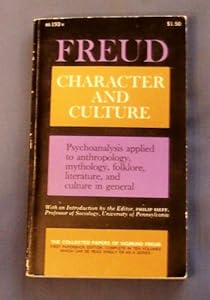
I have always been fascinated at how psychoanalyst Sigmund Freud looked at the world. I've been reading one of his books, Character and Culture, which is a compilation of his articles in 1950s and early 1960s. He was a brilliant writer. I liked his writing, in as much as the psychoanalysis content. There's one article however that struck me most and it is entitled Obsessive Acts and Religious Practices. This chapter is available for you to read or download.

Here is an excerpt:


It is easy to see wherein lies the resemblance between neurotic ceremonial and religious rites; it is in the fear of pangs of conscience after their omission, in the complete isolation of them from all other activities (the feeling that one must not be disturbed), and in the conscientiousness with which the details are carried out. But equally obvious are the differences, some of which are so startling that they make the comparison into a sacrilege: the greater individual variability of neurotic ceremonial in contrast with the stereotyped character of rites (prayer, orientation, etc.); it’s private nature as opposed to the public and communal character of religious observances; especially, the distinction that the little details of religious ceremonies are full of meaning and the understood symbolically, while those of neurotics seem silly and meaningless. In this respect an obsessional neurosis furnishes a tragic-comic travesty of a private religion. But this, the sharpest distinction between neurotic and religious ceremonials, disappears as soon as one penetrates by means of psychoanalytic investigation to insight into obsessive actions. By this process the outward appearance of being foolish and meaningless, which is characteristic of obsessive acts, is completely demolished, and the fact of their having this appearance is explained. It is found that obsessive acts are throughout and in all their details full of meaning, that they serve important interests of the personality, and that they give expression both to persisting impressions of previous experiences and to thoughts about them which are strongly charged with affect. This they do in two ways, either by direct or symbolic representation, so that they are to be interpreted either historically or symbolically.


Read and/or download full article here.

Sunday, March 10, 2013

Common sense and intuition: Monty Hall Problem Case

*Note: Bold texts are links


We know the dangers of acting and making judgments based on common sense, intuition, or gut feel. We are aware that these modes of thinking can be the worst way to find a solution, especially when it comes to medical problems, relationships and interaction with people, and making ethical decisions. How many times have we heard doctors tell people not to self-medicate? How many times have we ruined someone else’s day when we answered them “akala ko kasi e” and “para kasing?” But we still do. We still do actions by the dictates of common sense and a priori notions. We still let intuition be the arbiter of our lives, of society. One way or the other, this is reflected on the country’s (PH) love for games of chance such as lotto, jueteng, and ending. 

And again, I will illustrate the failure of common sense and intuition not to proscribe its use; but to advise others to think further before letting the two have the say. To argue this stance, I make use of the Monty Hall Problem.

Here’s a simplified version of the MHP (Monty Hall Problem) lifted from the book The Curious Incident of the Dog in the Night-Time by Mark Haddon (2003):
“You are on a game show on television. On this game show, the idea is to win a car as a prize. The game show host shows you three doors. He says that there is a car behind one of the doors and there are goats behind the other two doors. He asks you to pick a door. You pick a door but the door is unopened. Then the game show hosts opens one o the doors you didn’t pick to show a goat (because he knows what is behind the doors). Then he says that you have one final chance to change your mind before the doors are opened and you get a car or a goat. So he asks you if you want to change your mind and pick the other unopened door instead. What would you do?”


Your common sense and intuition will probably say that sticking or changing your chosen door does not matter and it is just about caprice and sheer luck since there will be a 50-50 chance that you will end up with the door with the car behind it, since there are only two doors left. But is this right? Simple analysis and critical thinking says NO.

Look at this graphical representation showing all the possible outcomes: 


The image demonstrates that whatever door you pick, the probability that you will get a car when you change door is 2/3 while sticking is 1/3.  These fractions tell us that it is always better to change the door than to stick with it because it has the higher probability of going home with the car.
This problem shows the shortcomings and weakness of common sense and intuition. (There is a reason why physicists conduct experiments, right?) Believe it or not, a number of mathematicians and people with doctorate degrees have argued that the probability you will get a car is 50-50, only to be proven wrong – I bet they trusted their common sense and intuition this time. Have a look at the tip of the roster:

Scott Smith, Ph.D., University of Florida
Robert Sachs, Ph.D., George Mason University
W. Robert Smith, Ph.D., Georgia State University
Everett Harman, Ph. D., U.S. Army Research Institute
E. Ray Bobo, Ph.D., Georgetown University

There are situations where use of common sense is not enough and the urge of intuition not worth the shot. Fundamental assumptions that were commonly accepted without further inquiry and questioning. Everyday knowledge proliferated to next generations such as superstitions and spiritualism. It is time to move to science, reason and logic for explanations. It is high time for empiricism. You would think that the Monty Hall Problem is superficial a reason to show the necessity to choose science and logic over common sense and intuition, but what if what’s behind one of those doors is a cure to cancer, to AIDS and laws that enshrine human rights? What would you do?